What is the new Social Value Model?
The new Social Value Model (PPN 002, 2025) updates the UK Government's approach to social value in procurement, requiring suppliers to evidence outcomes against five core national missions.
If you're working in public procurement, bidding for government contracts, or supporting organisations that do, you've probably come across PPN 002 (2025), the latest update to the UK Government’s Social Value Model. But what does it actually mean in practice?
What is the Social Value Model?
The Social Value Model is a framework developed by the UK Government to make sure public sector contracts deliver additional benefits for communities and the environment, beyond just the goods or services being purchased. In simple terms, “social value” means the wider positive impact a contract can create, such as improving local skills, creating jobs, reducing carbon emissions, or supporting communities.
First introduced in 2020 and updated in 2025, the Model helps public bodies consider and assess social value properly when awarding contracts. It goes beyond the earlier Social Value Act (2012), which only required some contracts to consider social value. This model makes it a scored part of central government procurement decisions.
Who is it for?
The Social Value Model is mandatory for:
-
All central government departments
-
Executive agencies
-
Non-departmental public bodies (like arm’s-length bodies)
Other public sector organisations, such as local councils, the NHS, or housing associations, aren’t required to use it, but are encouraged to do so. Many local authorities use this or similar models to embed social value into their own procurement strategies.
It’s also important for suppliers (including businesses, charities, and social enterprises) who want to win public contracts, as they’ll need to understand and respond to social value questions when bidding.
How does the Model work in practice?
| Stage | Who acts | Key requirement | Social Value Engine support |
|---|---|---|---|
| Planning | Buyer (public body) | Select social value themes relevant to the contract | Forecast tool to estimate expected value per theme |
| Tendering | Supplier (bidder) | Explain how social value will be delivered; proportionate to contract size | Report templates aligned to model themes |
| Evaluation | Buyer (public body) | Award at least 10% of scoring weight to social value | Comparable outcome data to support bid assessment |
| Contract management | Supplier and buyer | Report on commitments throughout the contract life | Ongoing tracking of promised outcomes against delivery |
Using the Social Value Model involves four main steps:
-
Planning: Choosing relevant themesAt the start of a procurement, buyers select the social value outcomes that best fit the contract. The model provides a menu of themes (like tackling economic inequality or reducing environmental harm). These are chosen based on what is realistic and meaningful for the contract.
-
Tendering: Asking the right questionsThe selected outcomes are turned into clear tender questions. Bidders must explain how they’ll deliver social value through the contract, for example, by offering apprenticeships or supporting local suppliers. These questions must be relevant and proportionate so that all suppliers, including small businesses and charities, can take part fairly.
-
Evaluation: Scoring social value proposalsBidders’ responses are scored as part of the overall evaluation.At least 10% of the total score must be based on social value, though this can be increased. Buyers look at how credible and impactful the proposals are, based on criteria set out in the model.
-
Contract management: Making sure it’s deliveredOnce awarded, social value commitments are written into the contract. Suppliers are then expected to report on their progress (for example, how many jobs were created or what carbon savings were achieved). This ensures social value commitments are followed up to confirm delivery.
The guidance also stresses fairness. Requirements must not be so burdensome that they exclude smaller organisations. Social value should be ambitious but achievable.
The five national missions
PPN 002 (2025) aligns the Social Value Model to the UK Government's five national missions, replacing the previous COVID-19 recovery theme. Buyers select the themes most relevant to each contract; not all five need to feature in every procurement.
| Mission | What it covers | Example outcomes |
|---|---|---|
| Kickstart economic growth | Skills, employment, and supply chain development | Apprenticeships, local hiring, SME and VCSE subcontracting |
| Make Britain a clean energy superpower | Carbon reduction and environmental resilience | Net zero commitments, sustainable supply chains, biodiversity gains |
| Take back our streets | Community safety and social cohesion | Support for disadvantaged communities, crime reduction partnerships |
| Break down barriers to opportunity | Removing obstacles to employment and progression | Support for disabled people, care leavers, and ex-offenders |
| Build an NHS fit for the future | Improving health outcomes and reducing pressure on services | Workplace health programmes, preventative interventions, volunteering |
Source: UK Government PPN 002 (2025), Social Value Model.
How the Social Value Engine supports it
The Social Value Engine (SVE) helps organisations plan, measure, and report on social value. It’s especially useful for those applying the Social Value Model.
-
Forecasting value: It helps procurement teams and suppliers estimate the social impact of proposed actions in a contract, using financial proxies (i.e., it gives a sensible estimate of how much a social benefit, like mentoring or job creation, is worth to society).
-
Supporting evaluation: By turning social outcomes into comparable data, it helps public bodies understand the likely impact of each bidder’s offer. While the Model itself focuses on qualitative scoring, the SVE adds more evidence and helps with comparisons.
-
Local context: The SVE can adjust values based on local economic conditions, making results more accurate and relevant to communities.
-
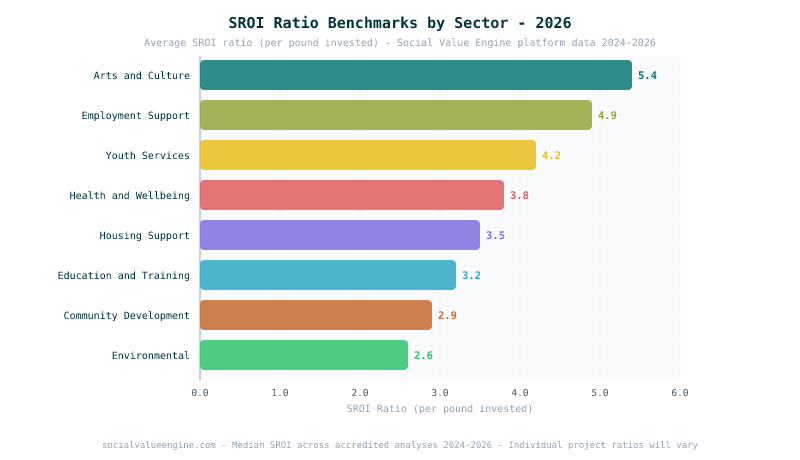
Managing delivery: The SVE can support contract monitoring by tracking real outcomes against what was promised, making it easier to report on results and demonstrate social return on investment (SROI).
-
Improves fairness: The SVE helps organisations prevent over-claiming and helps smaller suppliers put together realistic, high-quality proposals.
In short, the Social Value Engine brings structure and evidence to social value in procurement. It helps public bodies confidently apply the Social Value Model from start to finish, from planning and tendering through to delivery and impact reporting.
Frequently asked questions
Expand a question to read the answer.
The Social Value Model is mandatory for central government departments, executive agencies, and non-departmental public bodies. It is not a statutory requirement for local councils, NHS trusts, or housing associations, though many choose to adopt it or equivalent approaches in their own procurement strategies. Suppliers bidding for central government contracts must engage with it as part of the evaluation process, where at least 10 percent of the total score must reflect social value. For background on the broader legislative context, see our guide on the Procurement Act 2023.
Stay informed
Get insights on social value delivered to your inbox