
Jobs Plans: using local evidence to shape social value commitments
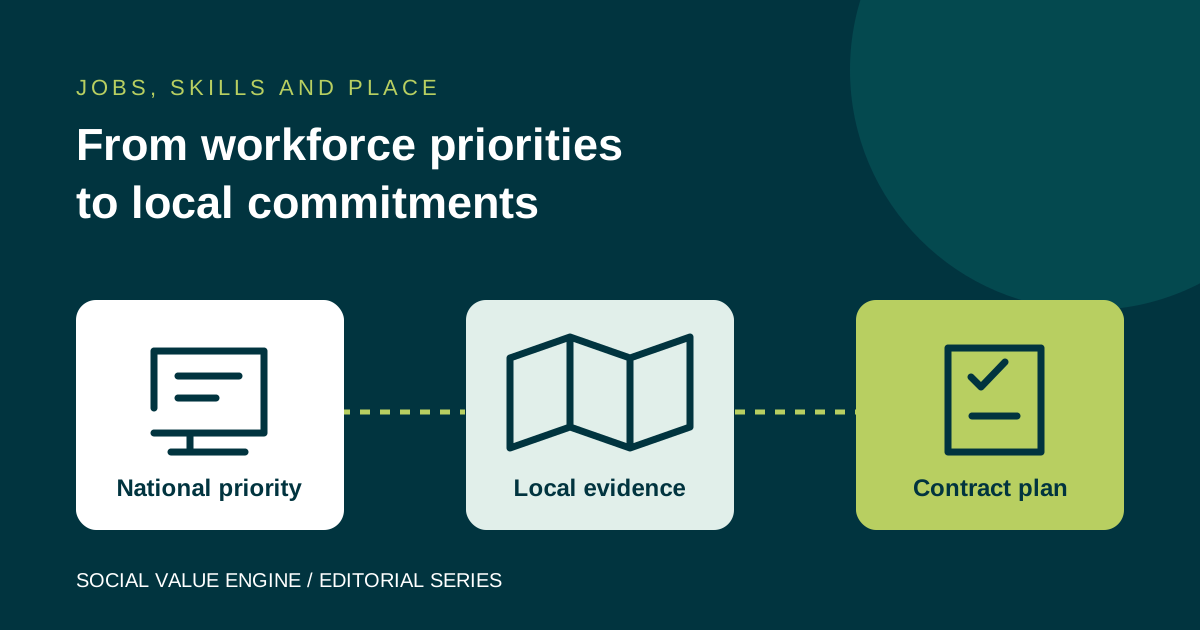
Use the Jobs Plans to identify workforce priorities, then test local needs, contract relevance and delivery capacity before setting social value commitments.
What do the October Jobs Plans tell buyers?
The government's Industrial Strategy Jobs Plans describe workforce needs across growth-driving sectors and construction. They can help buyers ask better questions about skills, entry routes and progression when planning contracts.
The Construction Jobs Plan and Professional and Business Services Jobs Plan were published on 19 October 2026. The Digital and Technologies Jobs Plan followed on21 October 2026. Together, these October publications provide workforce policy context for procurement planning.
Construction's plan calls for coordinated work on workforce supply and the barriers to investment and development. The professional and business services plan addresses skills pipelines, apprenticeships, work experience and career pathways, alongside workforce resilience as technology changes work. The digital plan addresses routes into technology careers, applied experience and barriers to entry.
These priorities give commissioners a starting point. The next task is to establish which need a particular contract could realistically address, in the relevant place and with the available suppliers and partners.
Sources checked: 16 November 2026. This article offers planning recommendations. Check current procurement documents and official guidance before applying them.
How do national priorities connect to local need?
Start with a question that can be investigated. For example: could this contract support a practical route from training into an entry-level role? A national skills shortage alone cannot show who needs support locally, which barriers they face or whether employers have suitable vacancies.
Build an evidence record using:
- Place Explorer to research local needs, with the underlying data source, geography, reference period and indicator definition recorded.
- The relevant Local Skills Improvement Plan, employer evidence and education-provider intelligence.
- Local employment and health plans, Joint Strategic Needs Assessments and community organisations' experience.
- Discussions with potential participants, specialist partners and trade unions where relevant.
These sources are also reflected in PPN 026 practitioner guidance, Annex E. Its examples include different skills-planning sources for England, Wales, Scotland and Northern Ireland. Check each source's geographic coverage. An England education programme cannot automatically be treated as a UK-wide delivery route.
Use area evidence to identify patterns, then test the interpretation with people who understand the area. A low qualification rate may coexist with transport barriers, unsuitable course times or a shortage of accessible placements. Each calls for a different response. Record gaps and contradictory findings instead of selecting only evidence that supports a preferred intervention.
Which commitments are relevant and proportionate?
Connect the proposed activity to the goods, services or works being bought. A labour-intensive maintenance contract may offer realistic training or progression opportunities. A short specialist assignment may have little capacity to host a new apprenticeship.
Under PPN 026, sections 3.1 and 3.2, buyers should select the minimum number of relevant criteria and sub-criteria needed, test market capability and consider the burden on SMEs and VCSEs. Requirements must meet the applicable duties on relevance, proportionality, equal treatment and non-discrimination.
The model applies to new covered Procurement Act procurements by in-scope central government bodies, worth at least £1 million including VAT and meeting the applicable public-contract threshold, with tender notices published from 1 January 2027. Other bodies may choose to adopt it. Transitional and framework arrangements need a separate check. Our PPN 026 overview explains the wider context.
Local evidence does not permit a preference for local suppliers, a requirement to use a UK subcontractor or restrictions that unlawfully disadvantage treaty-state suppliers. Consider whether a contract can be delivered from outside the UK and obtain procurement or legal advice where the proposed approach needs it.
Use our guides to ambitious requirements that smaller suppliers can deliver and proportionate measurement when testing the burden.
Worked example: an entry route into digital support
Illustrative planning exercise: a buyer is preparing a two-year digital support contract. The service specification requires a functioning helpdesk. Separately, the buyer is exploring an additional supported work-experience pathway under a relevant selected talent-pipeline criterion.
The buyer has not yet established local demand. A college is asked about recent leavers' barriers to employment, and suppliers are asked about supervisor time, security restrictions and accessible tasks. No local statistics or partner agreement are assumed in this example.
If that research supports the proposal, the buyer could test a pathway with six placements in year one, including preparation, supervised tasks and progression advice. This illustrative quantity would need to be tested against the contract's capacity, participant need and available support. The Jobs Plans do not prescribe a six-placement quota. Recruitment into employment would require its own evidence; completing a placement cannot establish that a participant secured a job.
Local-needs planning matrix
Copy this structure for each proposed commitment. Complete the blank evidence fields before setting a requirement.
| Planning field | Illustrative entry or question to resolve |
|---|---|
| National priority | Improve entry routes and applied experience in digital work; Jobs Plan dated 21 October 2026 |
| Local need and source/date | Record the relevant skills-plan passage, dated college evidence and participant feedback; findings still to be established |
| Geography | Contract delivery area and realistic travel or remote-access catchment |
| Affected cohort | Recent education leavers, subject to the tender's definition and confirmed need |
| Contract relevance | Supervised digital support experience alongside delivery of the service |
| Baseline | Existing placement capacity and support already promised elsewhere |
| Commitment and target | Illustrative six supported placements in year one, conditional on feasibility testing |
| Delivery partner | Education partner to be confirmed, including its capacity and responsibilities |
| Evidence | Start and completion records, support delivered, partner confirmation and optional progression follow-up |
| Owner and review date | Named supplier lead; review before tender finalisation and at agreed contract reviews |
| Risks and assumptions | Security access, supervision, accessibility, participant travel and future vacancies |
Download the local-needs planning matrix (CSV).
What should suppliers record?
Explain the delivery method, budget, supervision, participant support and partner dependencies. Establish what is already happening and what the contract would enable. Under PPN 026 guidance, section 4.3, an existing activity can be expanded where the expansion results directly from winning the contract. Keep a record of existing provision and commitments made elsewhere so the proposed expansion can be evidenced.
Check the selected criterion, target-cohort definition and reporting unit against Annex B of the PPN 026 guidance. Record how eligibility will be established and who will hold the supporting evidence. Our PPN 026 bid-writing guide explains how to turn the proposed activity into a deliverable bid response.
Use the tender's applicable metric and retain evidence of actual delivery. Our guides to jobs and skills outcomes and measurable KPIs explain the evidence questions in more detail. Keep attendance, completion, progression and sustained employment as separate claims.
Before finalising the requirement
Check the source dates, participant need, contract connection, delivery capacity and lawful access to the opportunity. Ask whether smaller suppliers can deliver and evidence the requirement without disproportionate administration. Confirm who will review progress and what happens if the assumed partner cannot participate.
The completed matrix should explain why the activity was selected and how its results will be assessed. It can support evidence-ready supplier responses and place-based evaluation, while leaving the detailed bid and mobilisation processes to the existing guides.
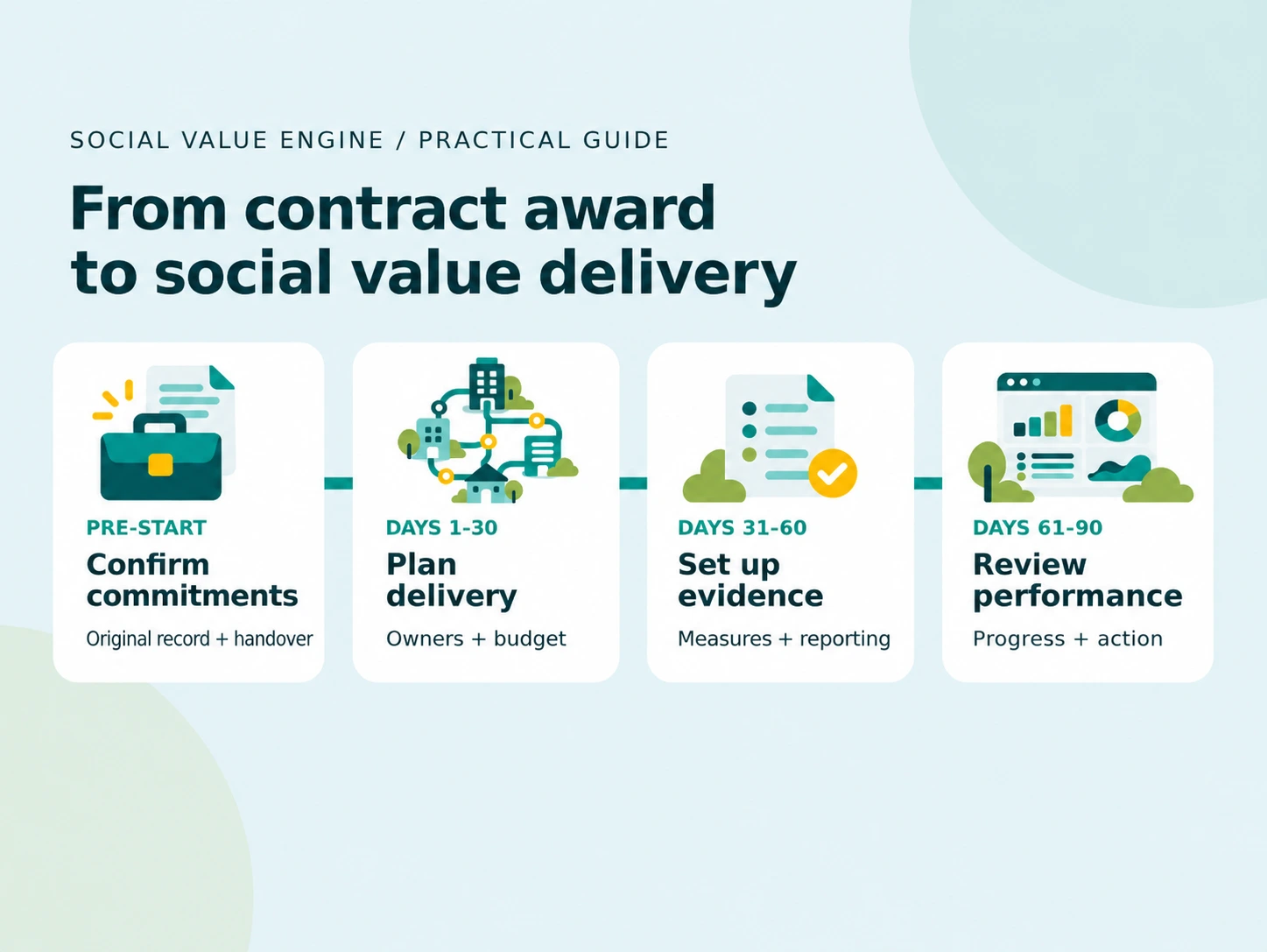
SVE Delivery can help suppliers use place data and local needs to inform bids, then track commitments and supporting evidence through delivery. Our contract mobilisation guide covers the handover from the winning bid into delivery.
Frequently asked questions
Expand a question to read the answer.
No. The plans provide workforce policy context. Procurement requirements need their own basis, including relevance, proportionality, equal treatment and applicable international obligations. A local need does not authorise a preference for locally established suppliers.
No. Area statistics help identify patterns and questions for local engagement. They do not establish an individual's circumstances or eligibility for a defined target cohort.
We recommend reviewing it during market engagement, before the tender is finalised and at agreed delivery reviews. Agree the review timetable for the specific procurement.
Stay informed
Get insights on social value delivered to your inbox