
The Community Wealth Fund: how do we know whether communities are becoming stronger?
The £175 million Community Wealth Fund will support 60 selected English communities over ten years. Its ambitions include stronger community decision-making, organisations and connections. Residents and funders can track progress through evidence of influence, capability, belonging, access and lasting change, with local people helping define what success means.
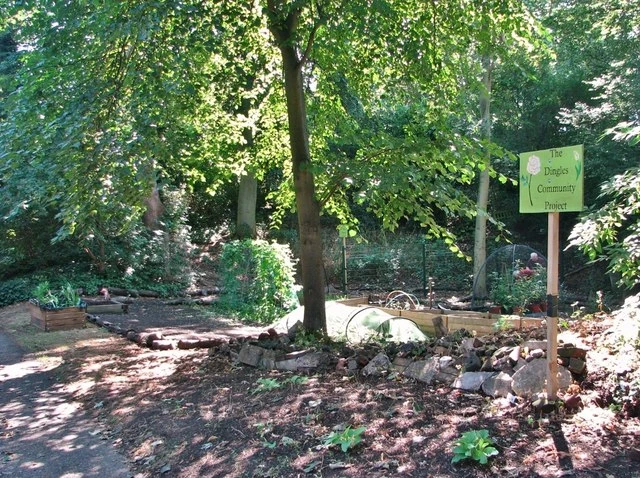
Image: The Dingles Community Project in Norwich, photographed by Evelyn Simak, 11 August 2018. CC BY-SA 2.0. Converted to WebP. This is an illustrative residents' garden, with no claim that it receives Community Wealth Fund support.
On 3 November 2026, The National Lottery Community Fund announced the 60 English communities selected for the Community Wealth Fund. The investment will run over ten years, with local people helping decide the priorities for their neighbourhoods.
A refurbished community centre is a visible change. The relationships, confidence and local leadership that help people use it and shape its future can take longer to develop. For residents and funders, recognising those changes will be part of understanding what the investment achieves.
What is the Community Wealth Fund seeking to change?
The Community Wealth Fund is a specific funding programme for selected areas in England. Community wealth building is a broader approach to how wealth is generated, held and circulated locally. The fund has its own geography, delivery arrangements and application process.
The programme overview describes ambitions to improve local services and facilities, support residents to decide what is best for their area, reduce inequality and bring communities closer together. These are intended outcomes. The announcement does not establish that they have already been achieved.
The £175 million comprises £87.5 million from the Dormant Assets Scheme and £87.5 million of match funding from The National Lottery Community Fund, which is the delivery partner.
According to the current overview, each selected area will receive £2.55 million over ten years:
- £1.5 million for the community to spend.
- £1.05 million for the representing organisation to support the community and cover operational costs.
The overall programme figure and the amount available for direct community spending describe different allocations. Communities should use the published breakdown when discussing what will be available locally.
The government's response to the technical consultation sets out the rationale for long-term funding backed by support to develop local skills and capacity. For current delivery amounts and application arrangements, the programme's own pages provide the more recent detail.
Which areas have been selected?
The 60 selected neighbourhoods have already been named. The list below follows the fund's official eligible-areas list, grouped by application round and local authority.
Selection applies to the named neighbourhoods within these council areas. Check the official boundary maps before assuming a particular address is covered.
Round one: 24 neighbourhoods
- East Lindsey: Ingoldmells and Chapel St Leonards.
- Leicester: Kirby Frith.
- Lincoln: Ermine.
- Nottingham: Top Valley East; Aspley.
- County Durham: Murton North and Parkside.
- Hartlepool: Owton Manor.
- Middlesbrough: Ayresome; North Ormesby and Brambles.
- Newcastle upon Tyne: Walker South.
- Redcar and Cleveland: Grangetown.
- Sunderland: Town End Farm.
- Barnsley: Kendray.
- City of Kingston upon Hull: Bransholme Central; Southcoates East.
- Leeds: Belle Isle North; Halton Moor.
- North East Lincolnshire: Grimsby East Marsh and Port; Nunsthorpe.
- Rotherham: East Herringthorpe.
- Sheffield: Firth Park; Shiregreen North; Woodthorpe.
- Wakefield: Ferry Fryston.
Round two: 21 neighbourhoods
- Blackpool: North East Centre; South Promenade and Seasiders Way.
- Halton: Grange, Halton Brook and Hallwood Park.
- Knowsley: Stockbridge Village.
- Liverpool: Belle Vale; Kirkdale South and Vauxhall.
- Manchester: Boothroyden and Higher Blackley.
- Rochdale: Heywood Town; Langley and Wood Side.
- Salford: Little Hulton North.
- Sefton: Seaforth South.
- St Helens: Derbyshire Hill.
- Wirral: Tranmere.
- Birmingham: Buckland End; Frankley; Quinton East; Turves Green.
- Coventry: Henley Green and Wood End.
- Redditch: Church Hill South.
- Solihull: Smith's Wood North.
- Stoke-on-Trent: Abbey Hulton.
Round three: 15 neighbourhoods
- Great Yarmouth: Yarmouth Parade.
- King's Lynn and West Norfolk: North Lynn.
- Tendring: Clacton Rush Green; Jaywick and St Osyth.
- Barking and Dagenham: Becontree South; Becontree West.
- Croydon: New Addington South.
- Havant: Stockheath Common.
- Portsmouth: Landport.
- Swale: Sheerness West.
- Thanet: Cliftonville West; Dane Valley and Northdown Hill.
- City of Bristol: Withywood.
- Swindon: Park North and Park South.
- Torbay: Paignton Central.
Once you have checked the relevant neighbourhood, use Place Explorer to explore local needs and inform discussions with residents.
Are applications open?
As checked on 23 November 2026, the programme overview is marked**“Coming soon”**. The eligible-areas page sets out three rounds:
- Round one: 13 January to 24 February 2027.
- Round two: opening in September 2027, with a six-week application window.
- Round three: opening in January 2028, with a six-week application window.
The fund will support one representing organisation in each selected area. Area boundaries differ from ward and council boundaries. Organisations should check the official maps, eligibility guidance and timetable for their area before preparing an application.
Why does community capacity deserve attention?
Community-led decisions require time, accessible information and people who can help residents organise. Bringing groups together, arranging childcare or accessible venues, supporting new volunteers and explaining how budgets work all use resources.
The fund's support allocation recognises work of this kind alongside the money communities can spend on their priorities. The programme gives examples including engagement, training and guidance, working groups and connections between community organisations.
Evaluation can examine whether that support is helping residents exercise influence. For example, a training session might lead to residents feeling able to chair a meeting, question a proposal or manage a small budget. Following that sequence helps explain how organisational support contributes to decisions and opportunities.
The number of sessions delivered is useful activity evidence. Changes in residents' confidence, participation and decision-making require their own evidence.
What might becoming a stronger community look like?
Residents will have different priorities and starting points. The following five areas offer a starting point for discussion.
These are suggested evaluation questions from Social Value Engine. They are not the fund's prescribed indicators or reporting requirements.
| Area of change | Question to explore | Possible evidence |
|---|---|---|
| Community influence | Who can shape decisions, including people previously excluded? | Resident proposals adopted, budget decisions and accounts of influence |
| Local capacity | Can community organisations sustain and manage their work? | Organisational reviews, volunteer support and succession plans |
| Connections and belonging | Do people feel connected and able to find support? | Repeated belonging questions, interviews and accounts of new relationships |
| Access and opportunity | Who can use the facilities, services and activities? | Participation patterns, accessibility feedback and reasons for non-participation |
| Lasting change | What continues after a project or funding period ends? | Continuing activities, maintained spaces, leadership and working partnerships |
A busy meeting could be an encouraging sign. Understanding who attended, who spoke and which decisions changed provides evidence about influence. Where the same small group makes every decision, attendance totals alone may conceal barriers for other residents.
An organisation might recruit volunteers while struggling to retain them. Reviewing induction, support, workload and reasons for leaving can identify what needs to change.
How can communities define and evidence progress?
Agree what matters and record the starting point
Invite residents to describe the changes they want to experience. Ask what would make participation worthwhile, which decisions they want a say in and what currently gets in the way.
A simple Theory of Change can connect support and activities to the intended outcomes. It should leave room for residents to challenge assumptions and change priorities as they learn.
Record a starting point before substantial activity begins where possible. Existing information may cover facilities, participation or organisational resources.
Use neighbourhood data to inform local priorities
Start by checking the selected neighbourhood on the fund's official eligible-area maps. Those links identify the relevant Middle Layer Super Output Area (MSOA), a statistical geography used to publish local data. Record the area name, code and boundary version so that evidence refers to the intended neighbourhood.
Use Place Explorer to research local needs and explore the evidence available for the place. Relevant questions include the area's population and age profile, employment and income, health, skills, housing and access to services. Record the underlying source, indicator definition, geography and reference period for each measure used.
Where suitable data is available, compare local conditions with a consistent local authority or national benchmark. Check geography carefully: an indicator published for a council area describes a wider population than a neighbourhood-level measure. Changes to boundaries or indicator definitions can also limit comparisons over time.
Use these findings to prepare questions for residents and identify gaps in the starting evidence. Local statistics describe patterns across an area; residents' experiences help explain the barriers, strengths and priorities within it. Decisions about what to fund should bring those sources of evidence together.
Combine short questions with evidence of decisions
A small set of repeated questions can help track changes over time. Illustrative prompts include:
- “How much influence do you feel you have over decisions affecting this neighbourhood?”
- “How easy is it to find someone locally who can help when you need support?”
- “What makes it easier or harder for you to take part?”
- “What has changed because residents raised an issue?”
Use consistent wording and response options where comparisons are intended. Record when responses were gathered, who was invited and how many responded. Changes in the people responding can affect apparent trends.
Alongside surveys, retain examples of decisions influenced by residents, participation records, organisational reviews and qualitative accounts of what changed. Our guide to low-friction stakeholder surveys offers practical help with keeping questions focused.
Include people whose experiences are missing
People who attend meetings may have more time, confidence or existing connections than their neighbours. Consider outreach through trusted groups, translated or accessible information, different meeting times and opportunities to contribute away from a formal meeting.
Ask about negative experiences and unintended effects. Residents may feel unheard, overburdened by volunteering or unable to access a popular activity. Those findings can guide improvements.
Explain what information is being collected, its purpose, who can access it and how long it will be kept. Participation in feedback should be voluntary. Obtain permission for identifiable stories or photographs, apply the organisation's data protection arrangements and avoid publishing details that could identify someone through context. Small-group reporting needs a considered disclosure review.
Use the findings to change delivery
Agree regular opportunities for residents and the supporting organisation to review the evidence together. Record what will change, who will act and how residents will hear the result.
Match collection effort to the decisions it supports. Proportionate social value measurement helps avoid collecting information that takes substantial time without helping residents or improving delivery.
Where can financial valuation help?
Social Return on Investment can add context where material outcomes are evidenced and suitable valuations exist. Reduced isolation or improved wellbeing may be relevant, subject to the assessment's scope and the quality of the evidence.
A credible assessment explains who experienced change, how long it lasted, what would have happened anyway and the contribution of other organisations. Financial proxies need a clear connection to the outcome. Overlapping valuations can count the same benefit twice.
Residents' priorities, accounts of influence and non-monetised findings should remain visible in reporting. A ratio on its own cannot explain whether people gained a meaningful say over local decisions.
The official sources reviewed for this article do not establish a requirement to undertake SROI. Organisations should follow the fund's current guidance and their grant conditions when agreeing evaluation and reporting.
For an example from a different programme in Scotland, our Community Led Local Development case study describes a shared approach to assessing locally chosen projects. Its methods and results belong to that programme and cannot be assumed to apply to the Community Wealth Fund in England.
What lasts beyond the investment?
Ten-year investment creates time to develop organisations, relationships and skills alongside facilities and services. Whether those changes persist will need to be examined over time.
Useful questions include who can take over when a local leader leaves, how a shared space will be maintained, whether groups can work together through disagreement and whether residents retain influence over future decisions.
An evaluation designed with residents can help communities recognise progress, address problems and explain what they want to protect. The account of success should reflect what people can do, access and influence as the investment develops.
Sources
Programme details checked on 23 November 2026. Application dates and guidance should be checked again before publication.
- The National Lottery Community Fund, Sixty communities to shape their own futures with £175 million fund, 3 November 2026.
- The National Lottery Community Fund, Community Wealth Fund programme overview.
- The National Lottery Community Fund, eligible areas and application rounds.
- UK Government, response to the technical consultation on the design of a Community Wealth Fund in England, updated 25 September 2025.
Frequently asked questions
Expand a question to read the answer.
The Community Wealth Fund is a £175 million programme supporting 60 selected communities in England over ten years. Delivered by The National Lottery Community Fund, it combines £87.5 million from the Dormant Assets Scheme with £87.5 million of National Lottery match funding.
The programme overview states £2.55 million per area over ten years: £1.5 million for the community to spend and £1.05 million for the representing organisation to support the community and cover operational costs.
As checked on 23 November 2026, the programme is marked Coming soon. The eligible-areas page gives 13 January to 24 February 2027 for round one, September 2027 for round two and January 2028 for round three. Organisations should check the official programme pages for their selected area's boundaries, current dates and eligibility.
The official sources reviewed for this article do not establish a requirement to undertake SROI. The evaluation approaches discussed here are suggestions from Social Value Engine. Applicants and delivery organisations should follow the fund's current guidance and grant conditions.
Residents can help define the decisions they want to influence, record their starting position and review what changed. Useful evidence may include proposals adopted, control over budgets, accounts of decisions changed by residents and feedback from people whose views were previously missing.
Stay informed
Get insights on social value delivered to your inbox